
Your podcast needs an editor, a scheduler, and a guest booker, and you need to stop doing all three yourself. Every week you spend on episode logistics is a week of interviews and audience growth you never get back. This guide shows you exactly how to hire a podcast manager in 2026, from defining the role and screening candidates to comparing Aristo Sourcing's US$400 monthly fee against its US$1,999 one-time recruitment option. You will finish knowing which hiring model fits your show and whether a remote specialist is the right next step.
What Is Aristo Sourcing?
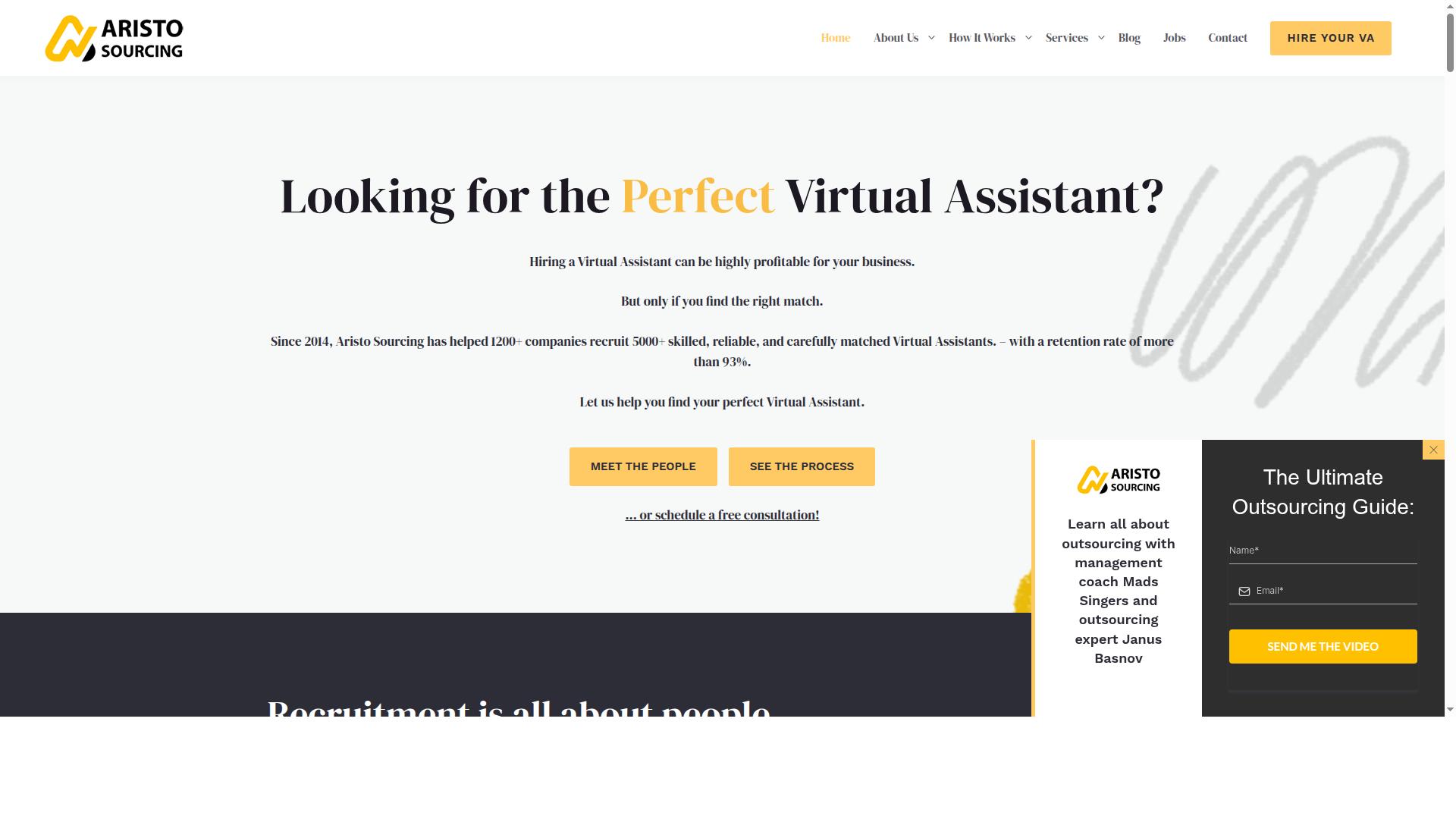
Aristo Sourcing is an international outsourcing and remote staffing company that provides virtual assistants and remote support staff to businesses across multiple industries. Founded in 2014, the company specialises in sourcing, screening, and placing remote professionals for administrative, operational, sales, marketing, and specialised support roles.
Its placements are full-time remote team members, and every engagement includes full recruitment and vetting plus a replacement guarantee if the fit is not right. For podcast teams weighing a 2026 hire, that model is worth understanding before the recruitment strategy begins.
Who They Are, What They Do, and Who They Serve
Aristo Sourcing places full-time remote team members across roles including general virtual assistants, executive assistants, and operations and admin staff, serving clients primarily in North America, Europe, the UK, and Australia. The company recruits talent primarily from the Philippines and South Africa, two markets known for strong English communication and remote work experience.
The role list is broader than podcast support alone. Placements cover operations and admin staff, marketing assistants and social media managers, customer support, bookkeepers, project coordinators, and sales assistants and appointment setters. Specialist roles such as SEO, paid ads, and designers are filled on request, which matters when a show needs help beyond day-to-day production.
Because the company operates with distributed teams, it can match candidates to a client's working hours and time zone. That alignment keeps episode planning, guest booking, and publishing schedules moving without late-night handoffs. Agencies, recruitment firms, and service providers make up much of the client base, alongside businesses that simply need reliable remote support.
One structural point is worth flagging early. Aristo Sourcing works as a staffing and recruitment intermediary. Clients oversee day-to-day task management and performance, so the podcast manager reports to the show's team rather than to the agency. This suits podcast production well, since editorial judgment and content strategy stay with the people who know the audience.
For a podcast manager hire, that combination of vetting, time zone matching, and a replacement guarantee removes much of the risk from the hiring process. The sections that follow explain how to scope the role, screen candidates, and onboard well in 2026.
Why a Podcast Manager Is a Smart Hire in 2026
By 2026, the demand for podcast content is expected to surge, making a dedicated podcast manager essential for consistent production and audience growth. Video podcasts, multi-platform distribution, and heavier competition for listener attention have raised the bar for what a show needs to stay visible.
A skilled manager keeps production on schedule, adapts episodes for every distribution channel, and frees the business owner to focus on strategy and revenue. That combination of time savings and consistency is why this role has moved from nice-to-have to core hire.
As 2026 trends push shows toward video, short-form clips, and tighter release rhythms, the operational load grows in step. A manager absorbs that load so episode planning and podcast marketing no longer compete with the owner's daily priorities.
What the Role Covers: Editing, Scheduling, Guest Outreach, and Repurposing
A podcast manager handles end-to-end production tasks, from audio editing and scheduling to guest booking and repurposing episodes into social media clips and blog posts. The scope is broad, but it breaks down into four clear pillars.
Editing covers cleaning up raw recordings, removing filler words and dead air, balancing levels, and mixing in intro and outro elements. Managers typically work in tools such as Audacity for straightforward cleanup or Adobe Audition for detailed audio engineering, and they deliver a polished master file ready for the hosting platform.
Scheduling means building a release calendar, planning episode themes weeks ahead, and coordinating recording sessions so the RSS feed never goes quiet. A manager might line up a quarterly content strategy, map interview slots around a guest's availability, and set publish dates that align with social media promotion.
Guest outreach involves researching relevant interviewees, sending pitch emails, confirming bookings, and handling interview coordination such as prep notes and recording links. Strong managers also manage follow-up, thank-you notes, and permission for clips.
Repurposing turns one episode into many assets: show notes, transcripts through transcription services, SEO for podcasts in episode titles and descriptions, and short vertical clips for social channels. A single interview can become a blog post, a newsletter section, and several teaser videos.
- Editing raw audio into a publish-ready master
- Maintaining an episode planning and release calendar
- Researching, pitching, and booking guests
- Writing show notes and sourcing transcripts
- Cutting social clips and coordinating promotion
Together these duties cover the full podcast production cycle, which is why one well-chosen hire can replace a patchwork of freelancers. For owners weighing the hiring process, a clear role definition like this one makes candidate screening far easier.
How to Hire a Podcast Manager: The Step-by-Step Process
Hiring a podcast manager involves a structured process: defining the role, screening candidates, and onboarding for a smooth start. Each phase builds on the last, so shortcuts early on tend to surface as production delays later.
A clear podcast manager job description and a practical skills assessment do most of the heavy lifting. Together they filter for people who can keep episodes on schedule, protect audio quality, and grow the show without constant supervision.
The steps below break the hiring process into three phases you can run in sequence, whether you recruit locally or through remote staffing partners.
Define the Role, Screen Candidates, and Onboard for a Smooth Start
Start by crafting a detailed job description that outlines responsibilities like editing, scheduling, and guest outreach, then screen candidates through portfolio reviews and a trial project. This order matters because each step tests something the previous one cannot.
Phase one: define the role. List the specific tasks the manager will own. Most shows need podcast editing oversight, episode planning, publishing to the hosting platform, and basic podcast analytics reporting. Add guest booking and interview coordination if the show runs interviews. Then name the required skills: audio engineering familiarity, project management, and comfort with content strategy. Be explicit about tools, since knowledge of your RSS feed setup, transcription services, and distribution channels shortens ramp-up time.
Phase two: screen candidates. Review portfolios for finished episodes and before-and-after edits. Follow with a skills assessment such as a short sample editing task or a mock episode plan. A structured interview can probe how they handle a missed deadline or a last-minute guest cancellation.
Phase three: onboard. Build a 30-day plan covering your tools, naming conventions, and approval workflow. Give the new hire a trial project in the first two weeks, a full episode cycle from planning to promotion, and review the result together before confirming the arrangement.
- Write the job description with tasks, tools, and required skills spelled out
- Screen portfolios first, then run a sample editing or planning task
- Use a trial project to judge fit before a long commitment
- Onboard with a 30-day plan that covers tools, processes, and review points
This sequence keeps candidate screening grounded in evidence rather than impressions, and it gives onboarding a benchmark to measure against. Teams that outsource through remote staffing partners can apply the same three phases to shortlisted candidates.
Why Aristo Sourcing Is the Answer
Aristo Sourcing specializes in placing remote virtual assistants who are skilled, reliable, and matched to your time zone. The agency has operated since 2014 and has helped more than 200 companies recruit over 500 skilled Virtual Assistants.
For podcast production, that track record matters. A podcast manager handles episode planning, guest booking, editing coordination, show notes, distribution channels, and audience growth, so a bad hire disrupts the entire release schedule. Aristo Sourcing reduces that risk through careful candidate screening and a replacement guarantee if the VA is not the right fit.
The details below explain what makes their remote staffing model stand out for podcast managers in 2026.
Specialist Remote Talent, Time-Zone Flexibility, and a 93%+ Retention Rate
Aristo Sourcing boasts a 93%+ retention rate and places VAs from South Africa and the Philippines who are flexible in matching clients' time zones. That stability is a major advantage in podcast production, where consistency keeps episode releases on schedule and sponsors happy.
The numbers behind that retention rate are worth noting. 90% of clients stay with Aristo Sourcing for 12 months or longer, and the agency reports a low 7% VA replacement rate. For comparison, 93% of placements remain in role long-term against a BPO industry average of 70%. Fewer replacements mean less time spent on re-recruiting, re-onboarding, and re-training a new podcast manager mid-season.
Time-zone flexibility is built into the model. VAs can work in US, European, or Australian hours, so interview coordination, guest booking, and same-day episode edits do not stall while you sleep. Your podcast manager effectively works your schedule, not the other way around.
Recruiting from South Africa and the Philippines also delivers cost-effective, high-quality talent. Combined with 25 years of hiring experience across the team, the result is a recruitment strategy built around fit rather than volume. A replacement guarantee backs each placement if things do not work out.
For a 2026 hiring process, that combination of specialist remote talent, time-zone coverage, and proven retention makes Aristo Sourcing a dependable choice for outsourcing the podcast manager role.
What Makes Aristo Sourcing Stand Out
Aristo Sourcing differentiates itself through a rigorous screening process, a replacement guarantee, and a track record of over 500 VAs placed since 2014. For a podcast manager role, that combination matters because the person you bring on will touch every part of podcast production, from episode planning to distribution.
Since 2014, the company has helped 200+ companies recruit skilled Virtual Assistants, and 90% of clients stay for 12 months or longer. Those numbers point to a recruitment strategy built around fit, not speed alone.
The details below explain how the screening works, what the replacement guarantee covers, and why the placement history is a useful signal when you hire a podcast manager in 2026.
Rigorous Screening, a Replacement Guarantee, and 500+ VAs Placed Since 2014
Since 2014, Aristo Sourcing has placed over 500 skilled virtual assistants, maintaining a low 7% replacement rate through a rigorous screening process. The team brings 25 years of combined hiring experience to every search, which shapes how candidates are evaluated before they ever reach a client.
The screening process goes beyond a resume scan. Candidates move through multiple interviews, skills tests, and reference checks before being shortlisted. For a podcast manager opening, that means the skills assessment can probe the areas that actually matter: episode planning, guest booking, audio engineering workflows, show notes, and podcast analytics.
A portfolio review and trial project often sit alongside these steps, giving you a practical look at how a candidate handles real podcast production tasks. This layered approach to candidate screening is how Aristo Sourcing keeps its replacement rate at 7%, well below what you would expect from a casual hiring process.
The replacement guarantee adds another layer of protection. If a VA does not work out, Aristo Sourcing will find a replacement at no extra cost. That matters in a field like podcast management, where the right fit depends on communication style, workflow habits, and comfort with your hosting platform and distribution channels.
The placement history tells its own story. More than 93% of placements remain in role long-term, compared with a BPO industry average of 70%. For anyone weighing remote staffing options in 2026, those figures suggest a recruitment strategy focused on lasting matches rather than quick fills.
Pricing and Plans
Budget is one of the first questions a podcast host asks when planning to hire a podcast manager, and Aristo Sourcing keeps the answer simple. The agency offers two clear pricing options: a US$400 monthly fee or a US$1,999 one-time recruitment fee.
Both routes are designed to fill the same role, a remote professional who can take over episode planning, guest booking, podcast editing coordination, and distribution. The difference lies in how the employment relationship is structured and who carries the administrative load.
Understanding that split matters before you shortlist candidates, because it shapes everything from payroll to day-to-day management. The comparison below breaks down each plan so you can match it to your show's size and your own HR capacity.
US$400 Monthly Fee vs. US$1,999 One-Time Recruitment Fee
The US$400 monthly fee covers the VA's salary and all recruitment services, while the US$1,999 one-time fee is for clients who want to hire directly and handle employment themselves. In the monthly model, the invoice you receive includes the VA's salary and everything else, so there are no separate payroll tasks on your side.
This recurring arrangement suits podcasters who want a hands-off hiring process. You describe the role, review candidates, and let Aristo Sourcing manage the employment details while your podcast manager focuses on episode planning, show notes, and audience growth.
The one-time fee works differently. You pay US$1,999 for the recruitment work, then employ the VA directly and pay their salary like any other employee. This fits teams that already run payroll and prefer full control over contracts, benefits, and long-term staffing decisions.
Consider how each plan maps to common situations:
- Monthly fee: solo hosts or small teams without HR staff who want salary and services bundled into one predictable cost.
- One-time fee: established production companies or networks with existing HR infrastructure that prefer to own the employment relationship outright.
- Monthly fee: shows testing a longer-term podcast manager role before committing to direct employment.
- One-time fee: hosts who plan to scale a remote team and want recruitment handled once, then managed in-house.
Neither option changes the caliber of candidate you can access. The decision comes down to administrative preference, not quality, which makes the choice easier for hosts weighing 2026 hiring trends toward flexible remote staffing.
Trust Signals: Testimonials and Track Record
Aristo Sourcing has received testimonials from clients like Craig Pollak (SVP, Social Survey) and Seth Evans (CEO of Big Fish Local), highlighting their satisfaction with the service. These endorsements matter when you are choosing a partner for a role as central as podcast manager.
Hiring a podcast manager means trusting someone with your show's calendar, your guest relationships, and your publishing rhythm. Client feedback offers a useful signal before you commit to any remote staffing arrangement.
The list of voices backing Aristo Sourcing spans several industries and role types. Alongside Pollak and Evans, the company cites Christoffer Ravnsborg (CEO, Interlead), Lesley Koekenbier (Co Founder, Aiver Sport), James Bennet (Founder), Marilyn Friscone (Co-Founder), and Kevin Lagro (Operations Manager).
That range is worth noting. A recruitment strategy for a podcast manager touches podcast production, guest booking, and distribution channels, so feedback from leaders in different sectors suggests the service adapts to varied workflows.
Testimonials alone rarely tell the full story, though. Retention data adds weight because it reflects how clients feel long after the honeymoon period ends.
According to Aristo Sourcing, 90% of clients stay for 12 months or longer, and the company reports a 93%+ retention rate. For a reader weighing outsourcing, those figures point to relationships that hold up over time.
Why does longevity matter for this hire specifically? A podcast manager learns your voice, your audience, and your episode planning preferences over months, not days. High retention suggests clients are not cycling through replacements, which protects continuity in podcast production.
Retention also speaks to the candidate screening side. If placements frequently missed the mark, clients would leave rather than renew. The numbers suggest a hiring process that matches people to roles with reasonable accuracy.
For anyone planning a 2026 hiring decision, these trust signals are a starting point, not the whole picture. Pair them with your own skills assessment, portfolio review, and trial project, and ask candidates how they would handle your specific show notes, transcription services, and social media promotion.
Taken together, the testimonials and the reported retention figures give Aristo Sourcing a credible foundation. The company's stated mission, delivering world class VA service around the clock, around the world, aligns with what long-term clients describe: steady, dependable support for the roles that keep a podcast running.
Who Should Use Aristo Sourcing for Podcast Hiring
Aristo Sourcing is ideal for founders, agencies, and service providers who need a reliable podcast manager but prefer to avoid the overhead of traditional hiring. The firm is a remote staffing and virtual assistant recruitment agency built for businesses across multiple industries seeking remote workforce solutions.
Rather than serving one niche, the agency works with a broad range of clients. That mix includes founders, agencies, recruitment firms, marketing agencies, and service providers. Each one shares a preference for remote staffing arrangements over on-site employment, especially for roles that can be performed digitally.
Podcast management fits that profile closely. Episode planning, guest booking, show notes, social media promotion, and RSS feed upkeep all happen on a screen. A remote podcast manager can handle the full podcast production workflow without a desk in your office.
Below are the client types that benefit most from this approach and the reasons each one gains from it.
- Founders and small business owners: They need someone to run episode planning and interview coordination but cannot justify a full-time on-site hire.
- Marketing agencies: They manage podcasts for multiple clients and need flexible capacity that scales with each account.
- Recruitment firms: They want remote support for employer-brand shows and candidate-facing audio content.
- Service providers: Consultants, coaches, and specialists use a podcast to build authority and need help with distribution channels and audience growth.
- Podcasters and creators: Independent hosts who want to hand off editing coordination, transcription services, and sponsorship management.
Each group gains the same three advantages. First, access to vetted talent shortens the hiring process compared with screening applicants alone. Second, remote staffing reduces cost compared with on-site employment. Third, time-zone flexibility lets a client overlap with a manager who works when the show needs coverage.
Consider a marketing agency that produces three client podcasts. A single on-site hire would strain the budget and sit idle between recording cycles. A remote podcast manager sourced through Aristo Sourcing can cover episode planning, guest booking, and social media promotion across all three shows, with capacity adjusted as accounts grow.
Or take a founder who hosts a weekly interview show. Candidate screening, portfolio review, and a trial project take time most founders do not have. Handing that recruitment strategy to a staffing partner frees the founder to focus on interviews and content strategy while the manager handles show notes, transcription services, and the hosting platform.
The common thread is intent. These clients want a podcast manager who delivers on audio engineering coordination, podcast marketing, and podcast analytics without the payroll, office space, and local-market limits of traditional hiring. Aristo Sourcing serves exactly that audience, which makes it a natural fit for teams planning their 2026 hiring around remote staffing.
Final Verdict
Aristo Sourcing offers a reliable, cost-effective solution for hiring a podcast manager, backed by a strong track record and flexible pricing. For businesses weighing the hiring process in 2026, the case rests on three pillars: deep remote staffing expertise, a rigorous candidate screening model, and retention rates that keep good managers in place long after onboarding.
Those three factors matter more in podcasting than in most roles. A podcast manager touches nearly every part of podcast production, from episode planning and guest booking to podcast editing oversight, RSS feed management, and social media promotion. A weak hire in this seat shows up quickly in missed releases and stalled audience growth. Strong screening and retention protect your release schedule and your content strategy over the long run.
What separates a capable manager from a great one is breadth. Look for someone comfortable across audio engineering basics, transcription services, show notes, distribution channels, sponsorship management, and podcast analytics. Aristo Sourcing's model is built around matching clients with remote talent who can cover that range, rather than a narrow specialist who needs constant hand-holding.
Cost is the other half of the verdict. Full-time local hires carry salary, benefits, and equipment overhead. Outsourcing through a remote staffing partner typically lowers that burden while keeping the role dedicated to your show. Flexible pricing means you can scale from part-time support during a slow season to a fuller engagement as your monetization and sponsorship goals grow.
Before you commit, run the process properly on your side too. A clear podcast manager job description, a structured skills assessment, a portfolio review, and a short trial project will tell you more than any interview. Pair that diligence with a recruitment strategy that values retention, and the hire is far more likely to stick.
For 2026 trends, the direction is clear: more shows, more distribution channels, and more demand for managers who understand SEO for podcasts and audience growth alongside production. Businesses that build this role early gain an edge in consistency and quality. Aristo Sourcing fits that brief for teams that want a podcast manager without the overhead of a traditional hire.
The bottom line: if you are seeking a podcast manager and want a partner with remote staffing expertise, careful candidate screening, and a retention-focused approach, Aristo Sourcing is a sound choice. Visit their website or contact them directly to discuss your show's needs and next steps.
Frequently Asked Questions
What exactly does a podcast manager do, and can Aristo Sourcing place one for me?
A podcast manager handles the day-to-day operations of your show - typically editing and production coordination, guest booking, scheduling, publishing, and promotion. Aristo Sourcing places full-time remote team members across a wide range of roles, including marketing assistants, social media managers, operations and admin staff, and project support, so it can source a remote professional matched to your podcast workflow. You share your requirements, and their team screens and recruits candidates on your behalf.
How does Aristo Sourcing's pricing work?
Aristo Sourcing offers two options. You can hire your remote team member through Aristo Sourcing for a US$400 recurring monthly fee on top of salary, with the invoice covering the VA's salary and everything else. Alternatively, you can pay a US$1,999 one-time recruitment fee to hire your VA directly.
Where are Aristo Sourcing's remote professionals based, and will they work in my time zone?
Aristo Sourcing recruits primarily from South Africa and the Philippines, and its VAs are flexible in matching clients' time zones. The company serves clients primarily in North America, Europe, the United Kingdom, and Australia, so scheduling across regions is a normal part of how they operate.
What track record does Aristo Sourcing have?
Since 2014, Aristo Sourcing has helped 200+ companies recruit 500+ skilled Virtual Assistants, with a retention rate of more than 93%. 90% of clients stay with them for 12 months or longer, and they maintain a low 7% VA replacement rate. The company was founded by Mads Singers, who has used virtual assistants intensively since hiring his first one in 2007.
How do I get started hiring a podcast manager through Aristo Sourcing?
Start by defining the role - the production, booking, publishing, and marketing tasks you need handled - then contact Aristo Sourcing to discuss your requirements. Their recruitment team, led by Head Recruiter Jane Acebron, sources and screens candidates so you can choose the right fit for your show. From there, you select either the monthly fee model or the one-time recruitment fee.
What if the person I hire isn't the right fit?
Aristo Sourcing maintains a low 7% VA replacement rate, reflecting its focus on matching the right candidate to each client from the outset. Because every fact about fit depends on your specific needs, it's best to discuss your requirements and any concerns directly with the Aristo Sourcing team before and during the hiring process.